Usability and UX Evaluation of Star Stable Online's Trailblazer Track Event
As part of my studies, I examined the time-limited "Trailblazer Track" event for usability, user experience and ethical design principles. I combined quantitative and qualitative methods and analyzed how mechanics like FOMO and grinding affect player behavior.
Background of my evaluation report
The starting point for my project report was a perspective that's personal and important to me: games often use mechanics like FOMO or grinding to keep players engaged long-term.
From my own experience, I know that this can quickly become problematic. Games then feel less like leisure and more like obligation.
That's why I wanted to understand how the time-limited Trailblazer Track event from the massively multiplayer online roleplay game "Star Stable Online" affects play behavior and user experience.
Context and goal
The event under examination ran for four weeks and was based on a classic progression system with milestones and rewards. Players could collect points daily to unlock new content.
The goal of my analysis was to:
- identify usability weaknesses
- understand the user experience
- and evaluate the influence of motivation-based mechanics like FOMO and grinding
I was particularly interested in whether the design tends to support players or create pressure.
Methodological approach
For the analysis, I deliberately combined several methods to get as complete a picture as possible. The starting point was a heuristic evaluation based on established UX heuristics. I used the event myself over several weeks and specifically examined it for usability problems. The focus was mainly on retracing typical usage situations and identifying weaknesses in the interface and in the flow of the event.
Based on these initial observations, I then developed a structured online survey. The goal was to compare and verify my own findings against real usage experiences. The survey was published across various community channels and reached a total of 74 participants from German-speaking and international groups.
The combination of my own evaluation and quantitative data allowed me not only to identify individual problems, but also to put them into context.
Key findings
Usability was fundamentally solid, with weaknesses in the details
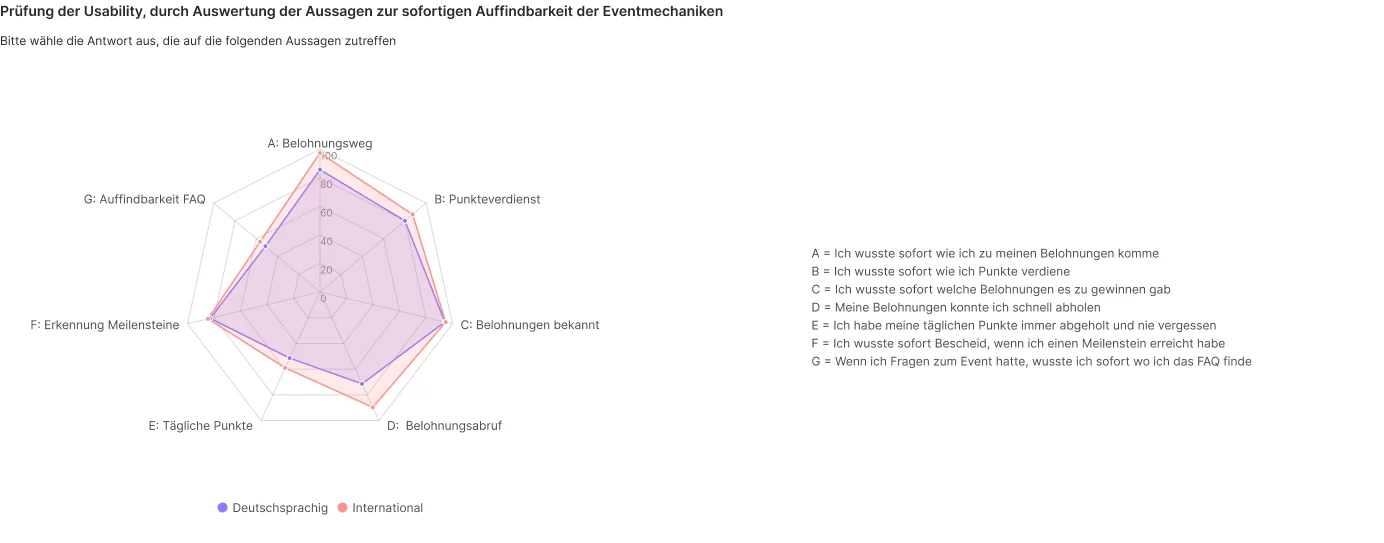
Overall, the event's basic usability worked well. Most players got the hang of it quickly: over 80% of participants knew how to earn points and redeem rewards.
At the same time, several weaknesses became visible in the details. A recurring theme was the lack of an overview of progress and milestones. Players often had to navigate manually to understand their current status. Central features like the FAQ also weren't found directly by many, suggesting that important information existed but wasn't placed visibly enough.
Another point was the lack of feedback for certain actions. This became particularly critical in connection with the currency system: there was no clear warning when reaching the currency limit, which could cause resources to be lost.
Everyday use also revealed an interesting small weakness: slightly less than half of the players said they occasionally forgot to collect their daily points. This suggests that even in systems that are fundamentally easy to understand, small hurdles in the flow can quickly become relevant.
FOMO and grinding were present, but not dominant
A particular focus of my analysis was on motivation-based mechanics like FOMO and grinding. From a personal perspective especially, I had expected a stronger negative effect here.
The results, however, were more nuanced.
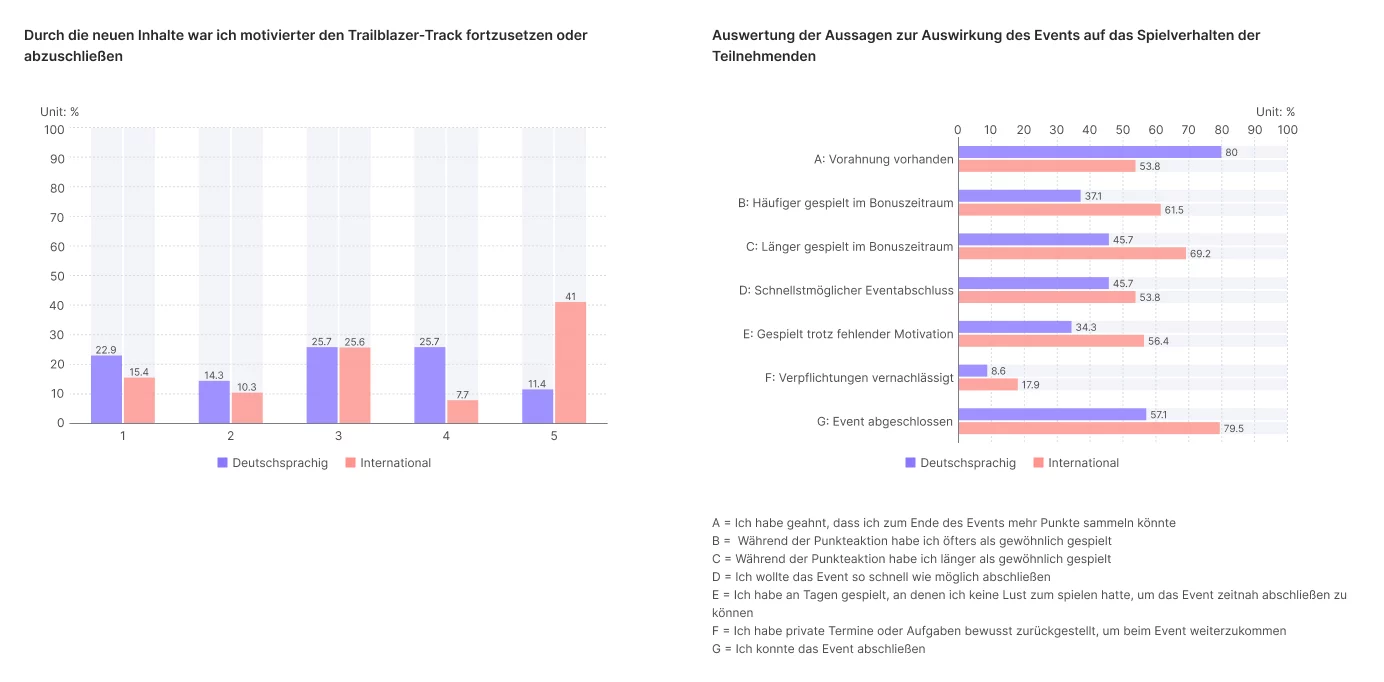
There were indeed signs of FOMO-typical behavior. This was especially visible in the international group, where players were more often active even when they had no real motivation. More than half of these participants said they played on such days anyway (56.4% of the international group versus 34.2% of the German-speaking group).
At the same time, the impact on everyday life remained surprisingly low. The large majority of respondents said they hadn't postponed private appointments or obligations in favor of the event (91.4% of the German-speaking group and 82% of the international group). This suggests that play behavior overall is consciously managed.
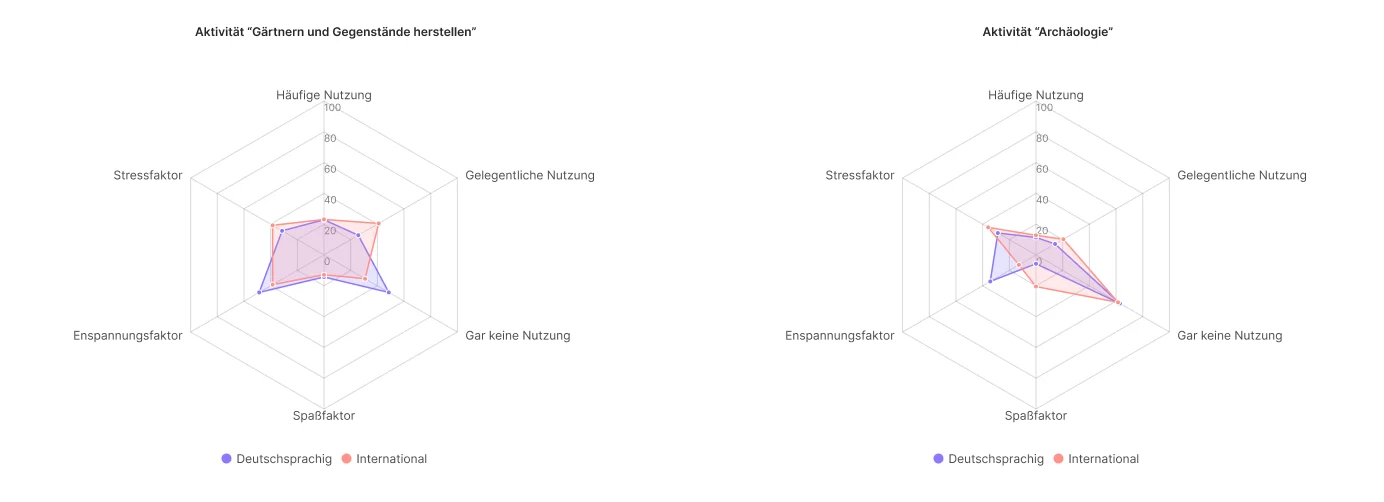
Grinding, too, wasn't perceived as uniformly negative. The rating strongly depended on context. Around 60% of players found certain repetitive activities relaxing, while other tasks — particularly those with higher effort and lower perceived benefit — were rated as annoying by about 35–40%.
Recommendations for Star Stable Entertainment AB
Combining the heuristic evaluation and the survey, I was able to identify several concrete starting points that could have a noticeable impact on the user experience with comparatively little effort.
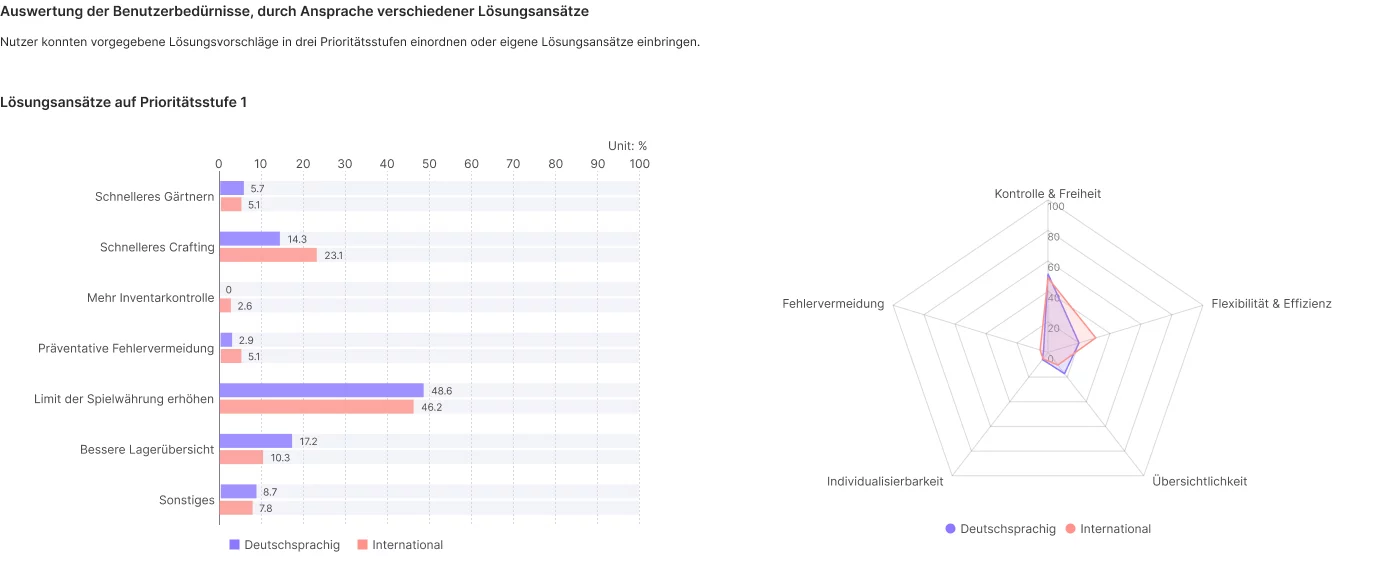
Lack of control due to the currency limit
The most frequently mentioned pain point is the currency system. Currently, excess currency expires without players being actively notified. A simple warning when reaching the limit would already be enough to prevent unintended losses. In addition, adjusting the limit itself could significantly increase the perceived sense of control. Both measures directly address a problem that's relevant not just functionally, but emotionally as well.
High interaction effort for recurring tasks
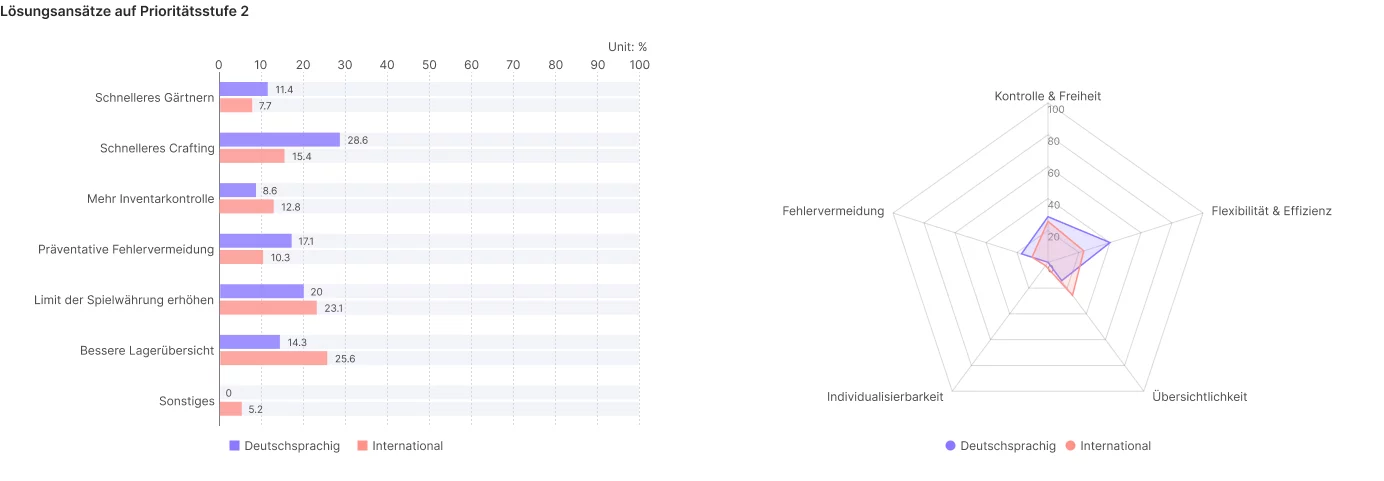
Many activities require repeated clicks, causing unnecessary effort in everyday play. Features like predefined quantity options or performing several actions at once could be integrated here with little development effort. The goal is to reduce recurring interactions without interrupting the flow of play.
Limited orientation in the inventory system
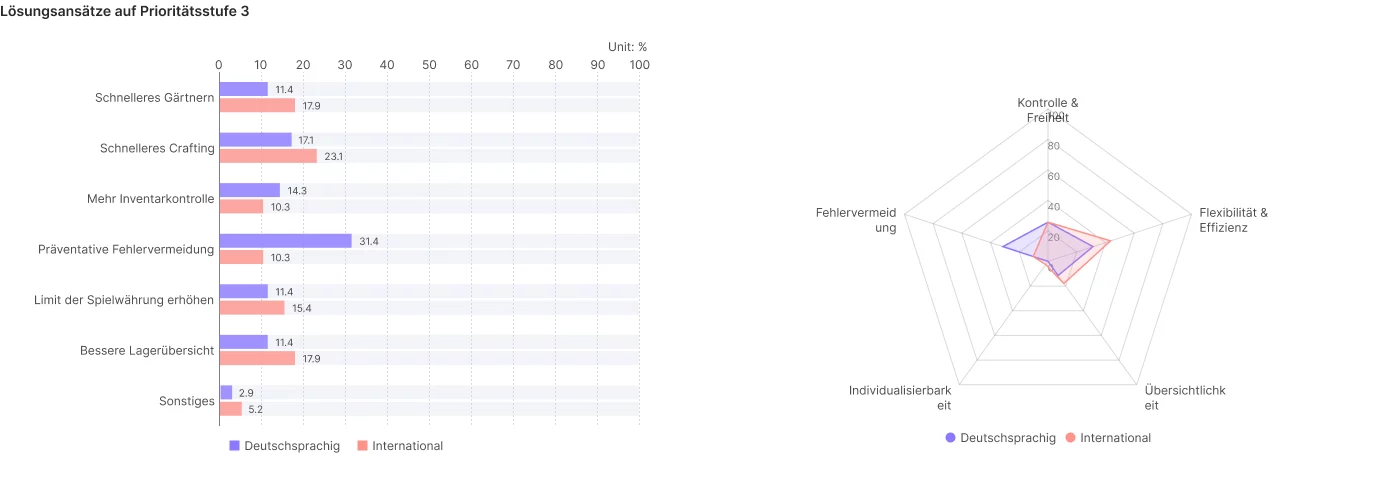
Finally, the storage and inventory system was repeatedly described as confusing. Filter and search functions in particular make it harder to access collected items. A more structured display, clearer filter logic, and the ability to flexibly manage item stacks would make usage noticeably easier while also supporting the collecting process.
Full project report
The full project report with detailed evaluation, methodology and graphical analyses is available here: