



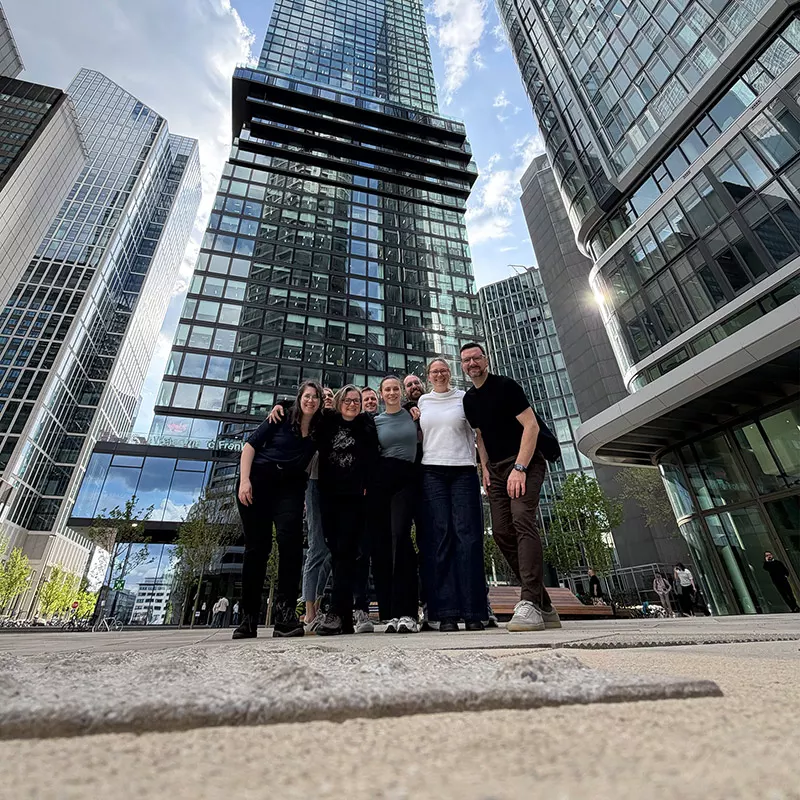
I was invited to the German UPA's strategy workshop in Frankfurt because I'll be running for board secretary. For me, it was mainly about understanding how strategic decisions come about within the association and what they're built on.
12 years
6 years
4 years
2 years
For me it comes down to time, budget and people first. An ROI calculation shows whether the effort pays off. For web applications, prototyping in code is a natural fit, for physical products it rarely gets you far. I'm curious where others draw the line.
I believe it needs free capacity, and small steps help. I improve something by one percent every day until the goal is reached. An additional specialist can speed that up. Which approaches have worked in other teams?
I understand when someone has learned their craft and is suddenly asked to work differently. Talking, evidence instead of hearsay and the chance to try something new without feeling replaced help me. Mandated changes without a visible reason risk frustration and, in the worst case, resignations. I'm always glad to swap experiences on this.
With tools, I know the pattern that they start out cheap or free and later cost a lot more. With AI, there is a risk of handing over solutions and thinking less creatively yourself. A design system based on Atomic Design and quick reactions to change limit dependencies best, in my view. Which dependency do we underestimate the most?
I know Atomic Design from development, and I understand the interface between design and code. In my experience that saves friction and time. For interactive prototypes I rely on AI and code because it works more reliably for me. I'm keen to hear where design teams miss that closeness to development today.
Your privacy settings