A Drawing Exercise for Round Shapes
Round shapes and flowing lines are among the most important fundamentals of drawing. This simple exercise helps improve control, looseness, and line work.
2 min read
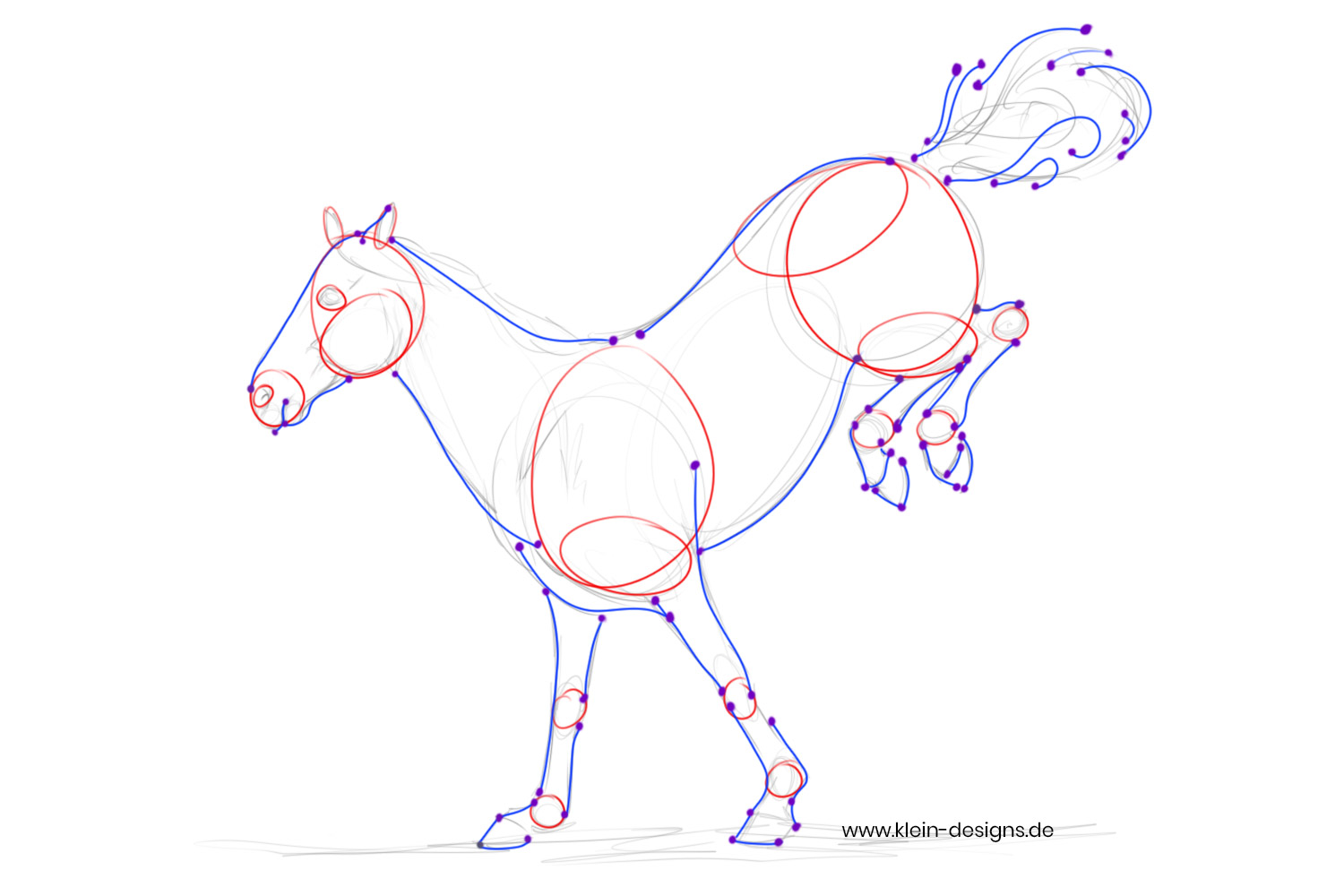
Before tackling complex subjects, it's worth training the fundamentals. One of the most important skills in drawing is control over sweeping lines and round shapes.
But before the pen even touches the paper or the tablet, the exercise actually starts somewhere else.
Loosen up first, then draw
Your hand is an artist's most important tool. Drawing while tense often produces shaky, unsteady lines.
Before any longer drawing session, a few simple warm-up exercises can help:
- rotate your wrists in circles
- stretch and spread your fingers
- shake out your hands
- consciously move and loosen your fingers
It only takes a few minutes, but it often noticeably improves control over the pen.
A common mistake
Many beginners try to draw especially carefully. The result is often short, jerky strokes instead of one flowing line.
Especially with horses or other organic shapes, sweeping motions are needed constantly.
So it comes down to this:
Have the courage to draw longer lines in a single stroke.
Not every stroke will be perfect. That's completely normal and part of the learning process.
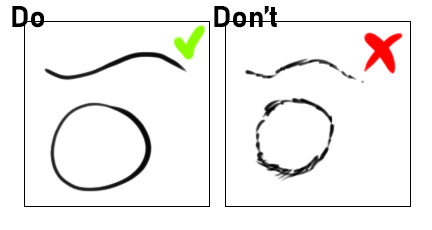
The exercise
The task is deliberately simple.
Draw:
- large circles
- small circles
- ovals
- long wavy lines
- sweeping arcs
Try working both slowly and quickly.
Slow lines build control. Faster lines often create more dynamism and a more natural feel.
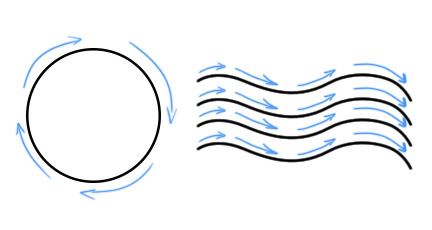
Use the entire drawing area and vary the sizes of the shapes. Perfection isn't the goal here — repetition is what counts.
Why this exercise matters
Most sketches are made up of surprisingly simple basic shapes.
Anyone who can confidently draw circles, arcs, and sweeping lines will later find it much easier to:
- sketch animals
- capture proportions
- depict movement
- draw dynamic poses
These fundamentals show up again in almost every drawing.
The next challenge
If circles and wavy lines start feeling too easy, you can take it a step further.
Take an existing sketch and analyze which basic shapes it's built from. Even complex subjects are often made up mostly of circles, ovals, and sweeping lines.
Then try to redraw the shapes as loosely as possible. This trains both your observation skills and your line work at the same time.
Conclusion
Drawing doesn't start with details, it starts with simple shapes.
Practicing circles, ovals, and sweeping lines regularly builds more confidence, looseness, and control over time. These skills form the foundation for nearly every other drawing exercise.
Jackie